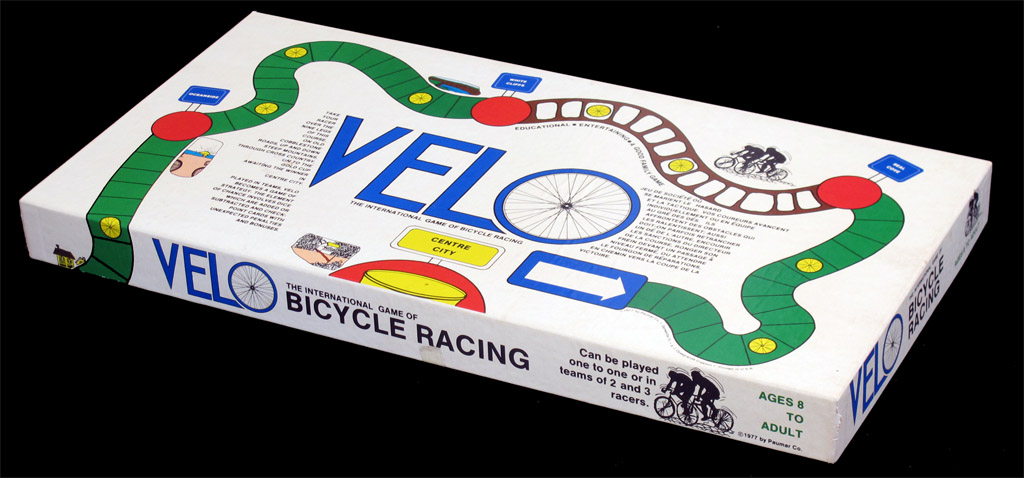
VELO, THE INTERNATIONAL CYCLING
GAME
Paumar Co., USA, 1977
American game, made in Gainesville, Florida. It is supposed to represent a stage race, but (as many other games) it features a single race. The red circles between stages represent rest spots but do not divide the race into stages. Players just must stop on these fields (if they make a dice throw higher than needed they just lose the extra points).
As you can see on the board, there are six normal (flat) stages, coloured green on the game board, and three brown ("difficult") stages. While in normal terrain, the player throws two dice and adds the points. In difficult terrain one die is subtracted from the other, and the rider advances by the amount of the difference (of course, not moving if he throws a double).
Players can manage a single rider or teams composed of two or three riders. In this case, they may give dice throws or chance cards to different riders of the team, and the winner of the game is the best team (in a simple points classification), not the first rider to reach Centre City.
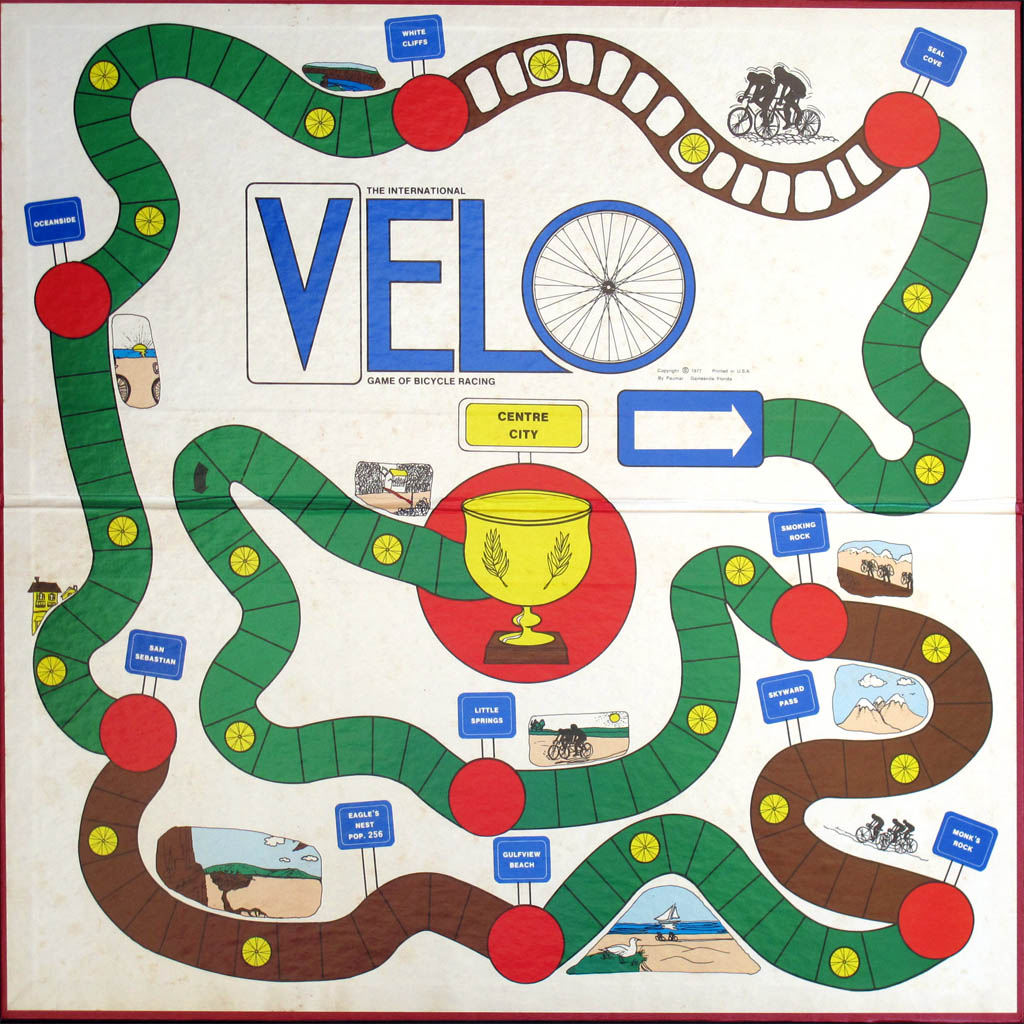
The open board measures 46 x 46 cm.
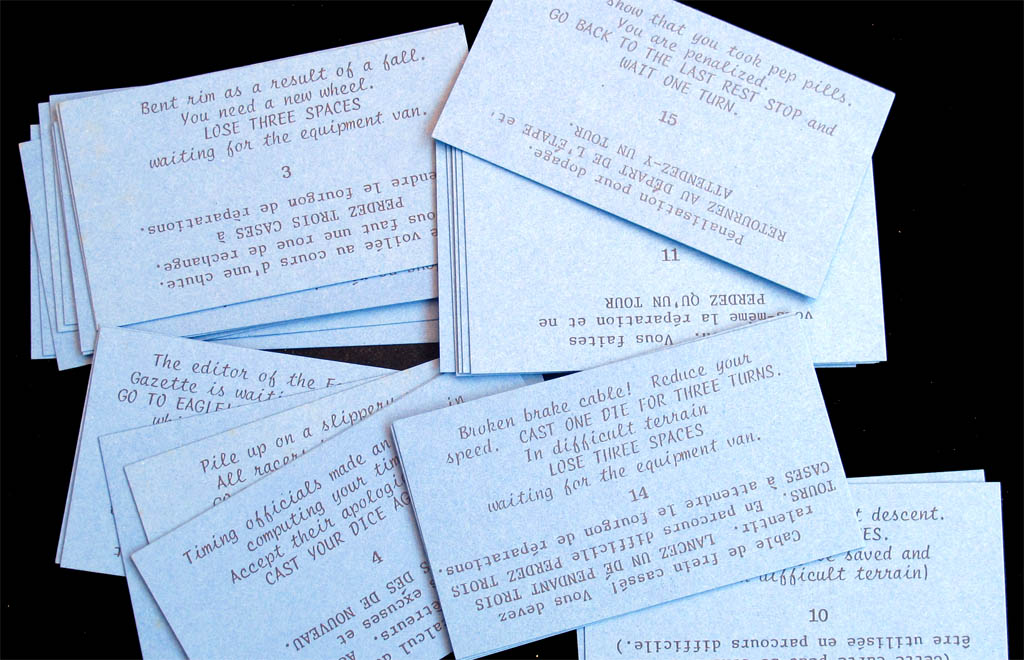
Chance cards must be drawn at the checkpoints represented by yellow wheels on the board.
A strange feature of this game is that it is bilingual English/French. I wonder if it was meant to be exported to Europe, or maybe just to Québec. The game not only has bilingual rules and chance cards, but it also has a set of stickers to convert the game board to French. Not to mention the game's title.
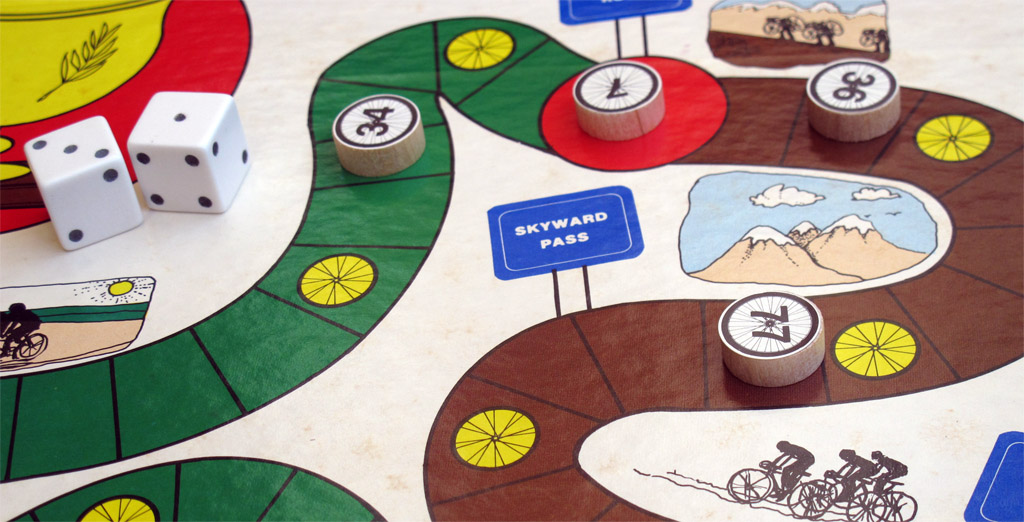
Riders are just wooden counters with bicycle-wheel stickers.
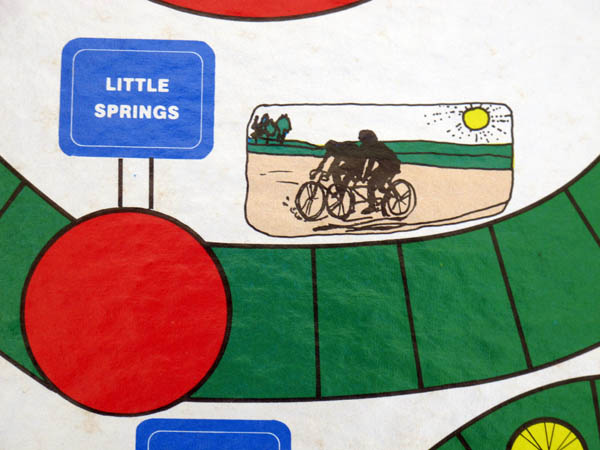
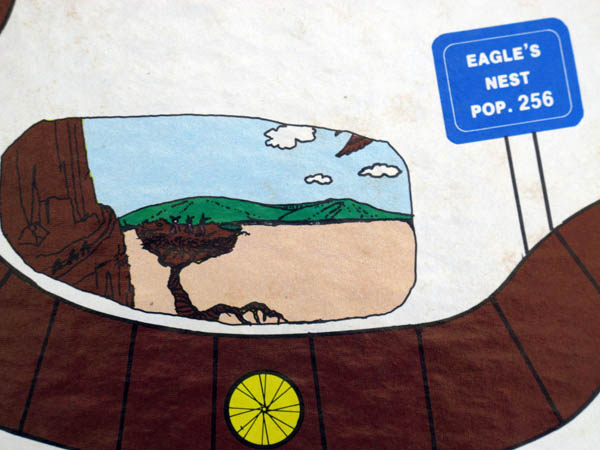
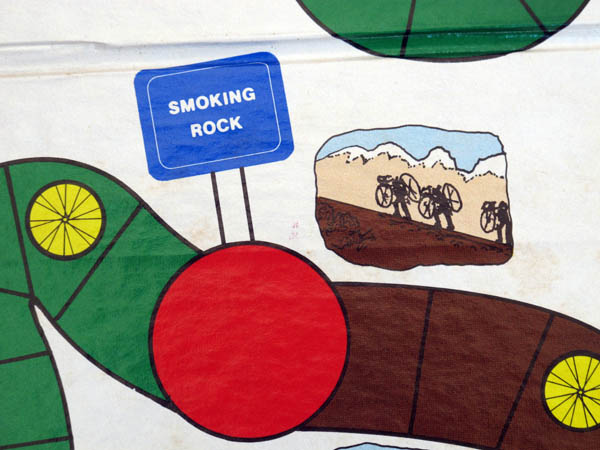
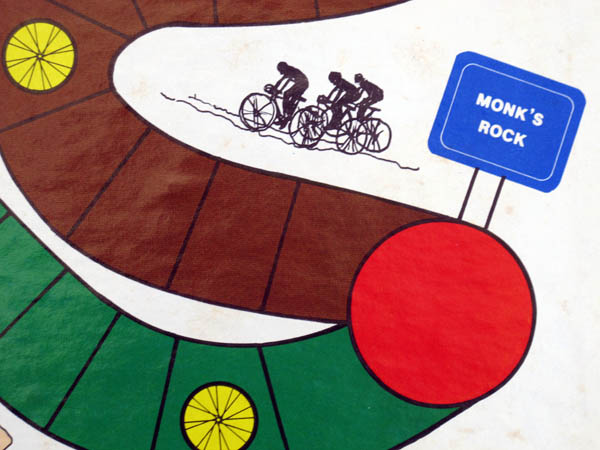
Here are the French stickers. Whatever the instructions say, I think "Monk's Rock" should be "St. Roch".
UPDATE October 2026:
A few years ago I mentioned an English/Spanish version of this game, but at the time I could only offer a couple of blurry pictures. However, since now I have it (thanks again, Mathilde, for gifting me your father's collection), I can finally post reasonable pictures. I also said that I did not know if there were versions of the game in other languages. I still do not know, but since I don't remember having seen them in all these years, my guess is that there aren't. If you know better, please let me know.

The box has been reused from the English/French version of the game, with just a sticker added on a corner. The possible explanation that comes to my mind is that the English/French version was the original, they did not sell all the copies, and they thought that a Spanish version would help to sell the rest. An alternative explanation, that both versions were released at the same time, doesn't make much sense. Why not go for a trilingual edition in the first place?
Here is the board with all the stickers applied.
The translation of the "Centre City" to "Metropolis", which does not even make much sense in Spanish, makes me think they have translated some stickers from the French version. This would be confirmed, for instance, by "San Roque" (French "Sy. Roch") while it would be denied by "Pico del Fraile" (English "Monk's Rock")
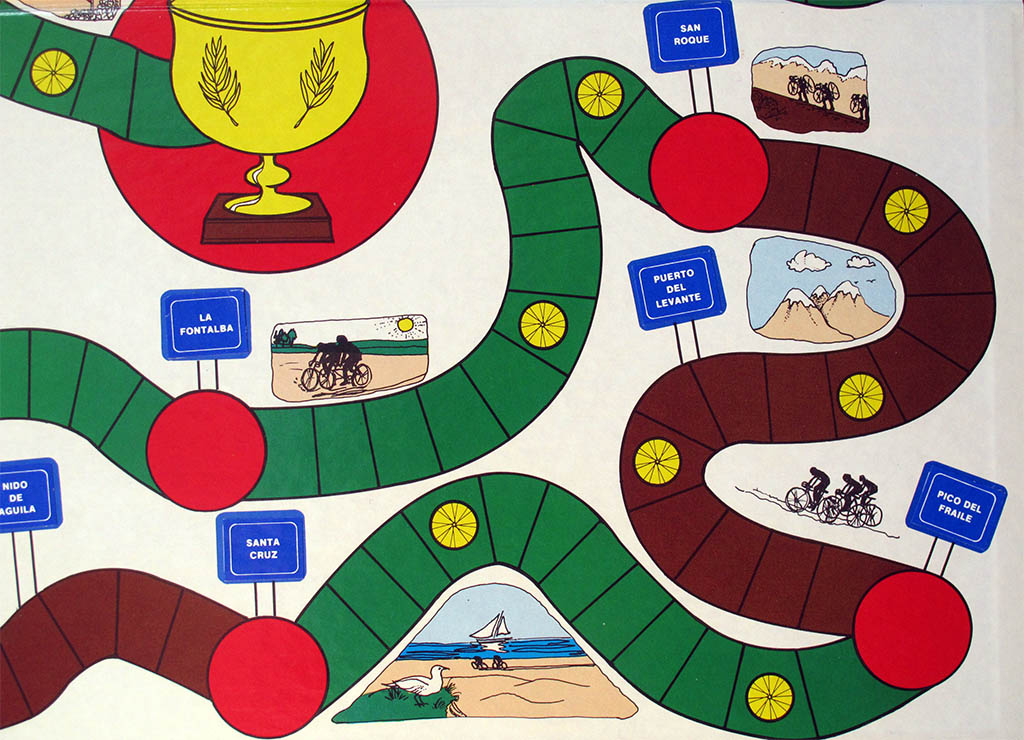
A close-up in case you find the board picture hard to read.
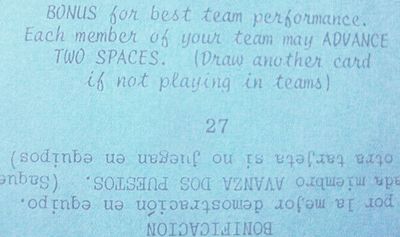
The cards (and the rulebook, by the way) are different in this edition, of course. They are still bilingual, but with a different language.
 |
 |
 |
 |
 |
|
CULTURE IDEAS |
TOTUM REVOLUTUM THUMBNAILS |
NAMES ALPHABETICAL |
CATEGORIES LISTS |
WHAT'S NEW BLOG |


